
 Dr. Ronald Steiner

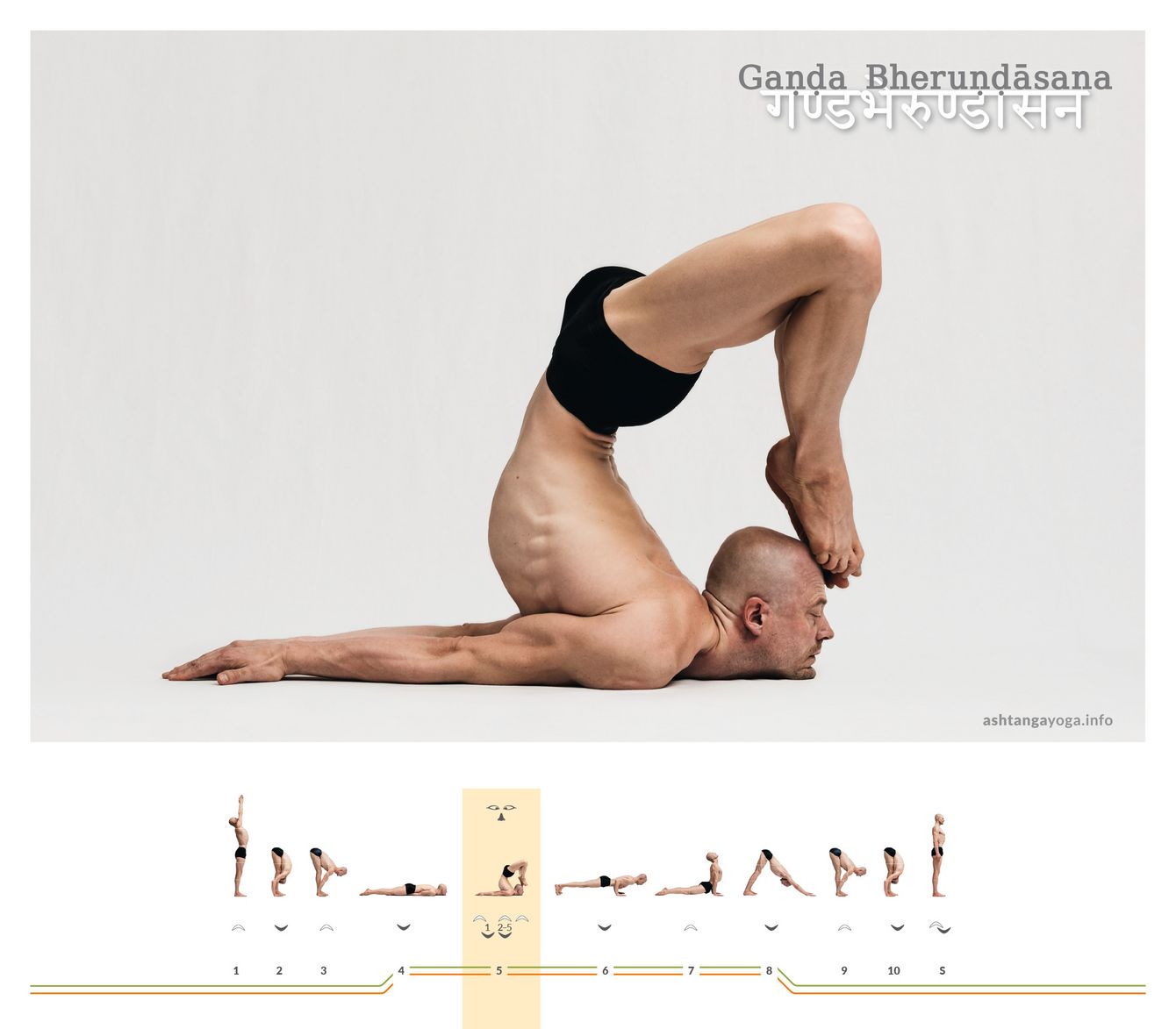
Gaṇḍa Bheruṇḍāsana: The two-headed bird
Mythology: Gaṇḍa Bheruṇḍa is a mythical two-headed bird and is known as an emblem of the Mysore tradition. Two heads on one body symbolize vigilance in two directions and concentrated power that does not tip into loss of control. This is why the name fits the form of the Āsana so well: the two feet beside the head resemble two “eagle heads,” symmetrically aligned, alert, and at the same time formidable. The myth offers a clear practical cue: you hold opposites together by balancing intensity with calm and strength with spaciousness until something clearly structured emerges from an extreme form.
In the traditional count: Begin directly from the hold in “Downward-Facing Dog” from the previous sequence.
Vinyāsa 4 – Inhalation, exhalation:
On an inhalation, glide forward into Plank Pose and, on the exhalation, lower into a prone position. Place your straight arms underneath the torso with the palms facing the floor.
Vinyāsa 5 – Inhalation, 5 breaths, inhalation:
With the inhalation, lift the legs high. With the exhalation, deepen the backbend and lower the feet onto the head into Gaṇḍa Bheruṇḍāsana. Remain until the fifth exhalation. Then inhale once more here.
Tip: A simpler entry comes through Mayūrāsana, a posture you already know from the Second Series. In Mayūrāsana, balancing on the hands, build a gentle backbend while the torso remains supported on the elbows. Then tip forward with control and place the chin and sternum on the floor. Because the torso is still carried by the elbows, the legs start higher automatically and can be guided more easily into the deep backbend. Once the shape is stable, straighten the arms and take the final form of the posture.
Vinyāsa 6 – Exhalation:
Lower back down into prone and, still within the exhalation, press up into Caturaṅga Daṇḍāsana.
Vinyāsa 7 to 8:
Follow the vinyāsa flow you already know until you are holding in Adho Mukha Śvānāsana.
In the traditional count: From here, move directly on into the vinyāsa of the next posture.
Effect: Gaṇḍa Bheruṇḍāsana challenges the posterior chain, especially the glutes and spinal extensors. At the same time, it requires precise control of the shoulder girdle. The posture develops mobility in the thoracic spine and hips. When practiced cleanly, it trains gathering, calm breathing, and accurate load distribution. Practiced poorly, the load quickly shifts into the neck and throat area or into the lumbar spine. Practice this posture with care.
Fotograf: Richard Pilnick - www.richardpilnick.com
Messages and ratings