
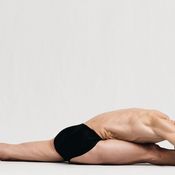
 Dr. Ronald Steiner

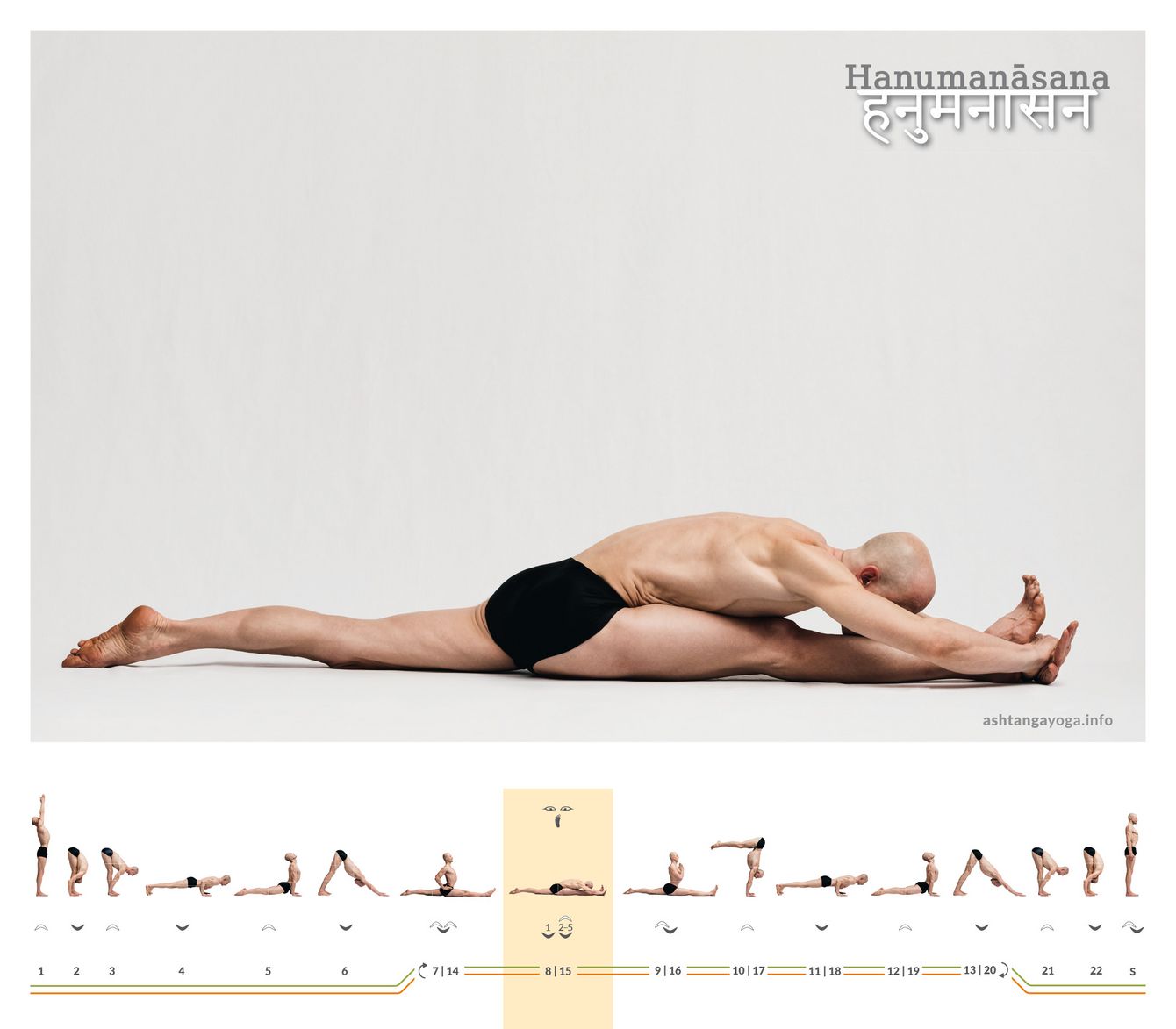
Hanumānāsana: Hanumān’s Split
Mythology: In the Rāmāyaṇa, Sītā is abducted and taken to Laṅkā. Rāma sends Hanumān to find her and deliver a sign. Before him lies the ocean—too far for an ordinary jump. Hanumān gathers his courage, aligns his mind with the mission, and leaps.
Midway across the sea, something happens that reads like an image of trust: Maināka, a mountain, rises from the ocean to offer Hanumān a place to rest. It is as if the world itself responds to his determination and places “land” beneath his feet. Hanumān accepts the help without stopping. He touches the mountain briefly, offers thanks, and flies on, because his goal matters more than the pause.
This motif fits Hanumānāsana precisely: you go far, but not recklessly. You find stability in the moment, use it as a waypoint, and remain inwardly clear. Trust does not move mountains by pressure, but by alignment.
In the traditional count: Begin directly from the hold in “Downward-Facing Dog” from the previous sequence.
Vinyāsa 7 – Inhalation, exhalation:
On an inhalation, slide your right foot forward between your hands. On the exhalation, lower the pelvis toward the floor. Inhale, place your hands on your hips, and lift the torso upright.
Tip: In the split, avoid compensating. Let the pelvis face straight forward, and let the front of the back leg orient toward the floor. As soon as the pelvis turns open, the stretch shifts to the inner thigh. This can overload the medial knee ligament and, through the twist, also strain the spine. Most importantly, that “gained” flexibility does not bring you closer to Hanumānāsana, because what you primarily need is length at the front of the hip of the back leg. Stay a little higher instead and support your weight with your hands at first. Flexibility then develops slowly and cleanly, until you can enter the posture without compensating.
Vinyāsa 8 – Exhalation, 5 breaths:
On the exhalation, fold far forward. With your right hand, reach around your right foot to your left wrist. Remain in Hanumānāsana until the fifth exhalation.
Vinyāsa 9 – Inhalation, exhalation:
Inhale and lift back up. Exhale and bring your hands together in front of the heart.
Vinyāsa 10–13:
Follow the vinyāsa flow you already know until you are holding in “Downward-Facing Dog.”
Tip: Lifting out of the posture often becomes surprisingly light when you place your hands beside the pelvis. Press your hands strongly into the floor from the shoulder blades. At the same time, press both legs actively into the ground and draw them energetically toward each other. The pelvis then lifts over the shoulder girdle, and you can briefly lift and balance with straight legs. From there, lower with control with Vinyāsa 11 or Vinyāsa 18 back into Caturaṅga Daṇḍāsana.
Vinyāsa 14 to 20:
Repeat the entire sequence (Vinyāsa 7 to 13) on the other side.
In the traditional count: From here, move directly on into the vinyāsa of the next posture.
Effect: Hanumānāsana primarily opens the hip flexors of the back leg. At first, shortened structures at the front of the hip—especially the M. iliopsoas—usually limit how deep you can go. Over time, the limiting factor tends to shift to the Lig. iliofemorale at the front of the hip, and creating more range there often takes significantly longer. Even a small gain in hip extension, however, gives you noticeably more mobility in almost all backbends. Hanumānāsana also improves flexibility in the back line of the front leg. Because one leg works behind while the other works forward, the pelvis remains comparatively stable between them. This is why Hanumānāsana is one of the most effective postures for developing flexibility for forward bends and backbends at the same time.
Fotograf: Richard Pilnick - www.richardpilnick.com
Messages and ratings