
 Dr. Ronald Steiner

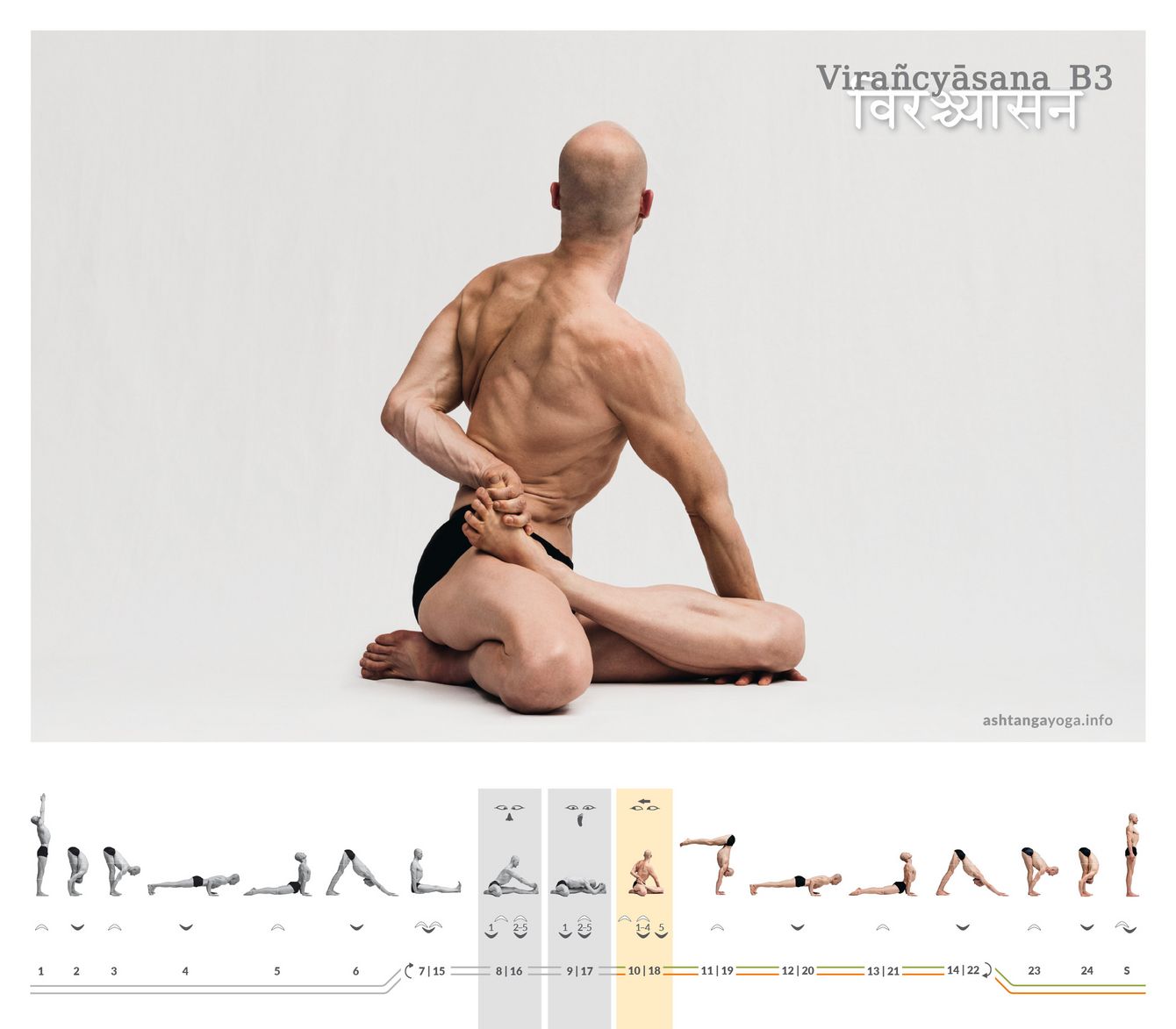
Virañcyāsana B3: Posture of Virañcya
Mythology: Brahmā is often depicted with four faces—an image suggesting that creation embraces all directions. Virañcyāsana B3 points to exactly this: clarity does not always come through the “straight” path. Sometimes order appears only when you change perspective and follow an impulse that feels unfamiliar—yet true.
In the traditional count: Begin directly from the previous posture.
Vinyāsa 10 – Inhalation, 5 breaths:
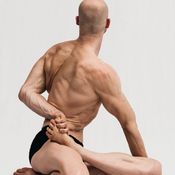
As you inhale, lift your head and place the left foot in Lotus on the right thigh. Then turn to the left, place the right hand under the left knee, and take hold of the left big toe behind the back with the left hand. Remain here until the fifth exhalation.
Tip: Stabilize the base first, then rotate from the thoracic spine—not from the knee and not from the lumbar spine. Keep the breath calm and use the exhalation to unfold the rotation gradually, and the inhalation to keep the heart space wide. Only with sufficiently flexible hips can this posture be practiced safely; otherwise you risk overloading the knees.
Vinyāsa 11–14:
At the end of the fifth exhalation in the posture, place your hands on the floor and follow the vinyāsa flow you already know until you are holding in “Downward-Facing Dog.”
Vinyāsa 15 to 22:
Then repeat the entire sequence (Vinyāsa 7 to 14) on the other side.
In the traditional count: From here, the vinyāsa continues directly into the next posture.
Effect: You combine a stable base with rotation, refining coordination, upright alignment, and breathing space in the chest. When you work cleanly, the twist becomes “light”; when you pull, it becomes “hard.”
Fotograf: Richard Pilnick - www.richardpilnick.com
Messages and ratings