
 Dr. Ronald Steiner

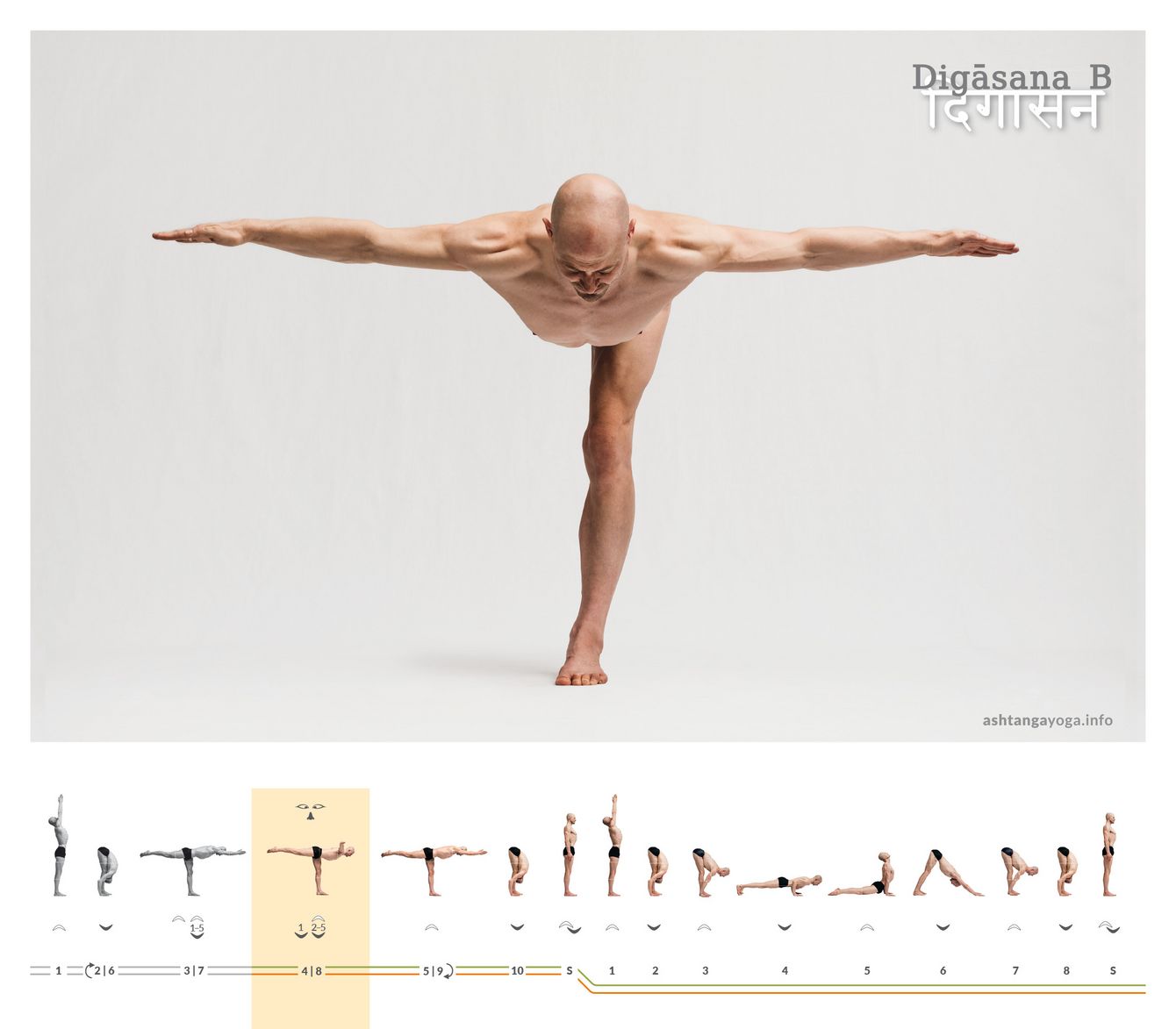
Digāsana B: The posture of the directions
Mythology: Diś means “direction.” In maṇḍala and temple ground plans, space is organized through clear axes: an East–West line and a North–South line cross at the center and provide orientation. The Dikpālāḥ symbolically stand for the protected directions, while the center remains the reference point from which everything aligns. This creates spaciousness with structure: space opens without losing its order. Digāsana recalls this principle by asking you to expand breadth while keeping a clear center.
In the traditional count: Begin directly from the previous posture, Digāsana A.
Vinyāsa 4 – Exhalation, 5 breaths:
On the exhalation, open the arms out to the sides at shoulder height and set up Digāsana B. Remain until the fifth exhalation.
Tip: Rather than only “lifting” the arms, imagine you are pressing the palms down toward the floor. This gives the trunk stability and helps you keep the width evenly in one plane in all directions, without the shoulders creeping up.
Vinyāsa 5 – Inhalation:
On the inhalation, stretch both arms forward again for Digāsana A.
Vinyāsa 6 to 9:
Repeat the entire sequence on the other side.
Vinyāsa 10 and Samasthitiḥ:
Follow the vinyāsa flow you already know back to neutral standing, Samasthitiḥ.
In the traditional count: From here, the vinyāsa flows directly into the next posture.
Effect: Digāsana B deepens the work of A and adds the lateral arm extension. You train balance, trunk stability, and shoulder-girdle organization with an open arm position. The posture improves coordination, steadiness, and spatial orientation
Fotograf: Richard Pilnick - www.richardpilnick.com
Messages and ratings