
 Dr. Ronald Steiner

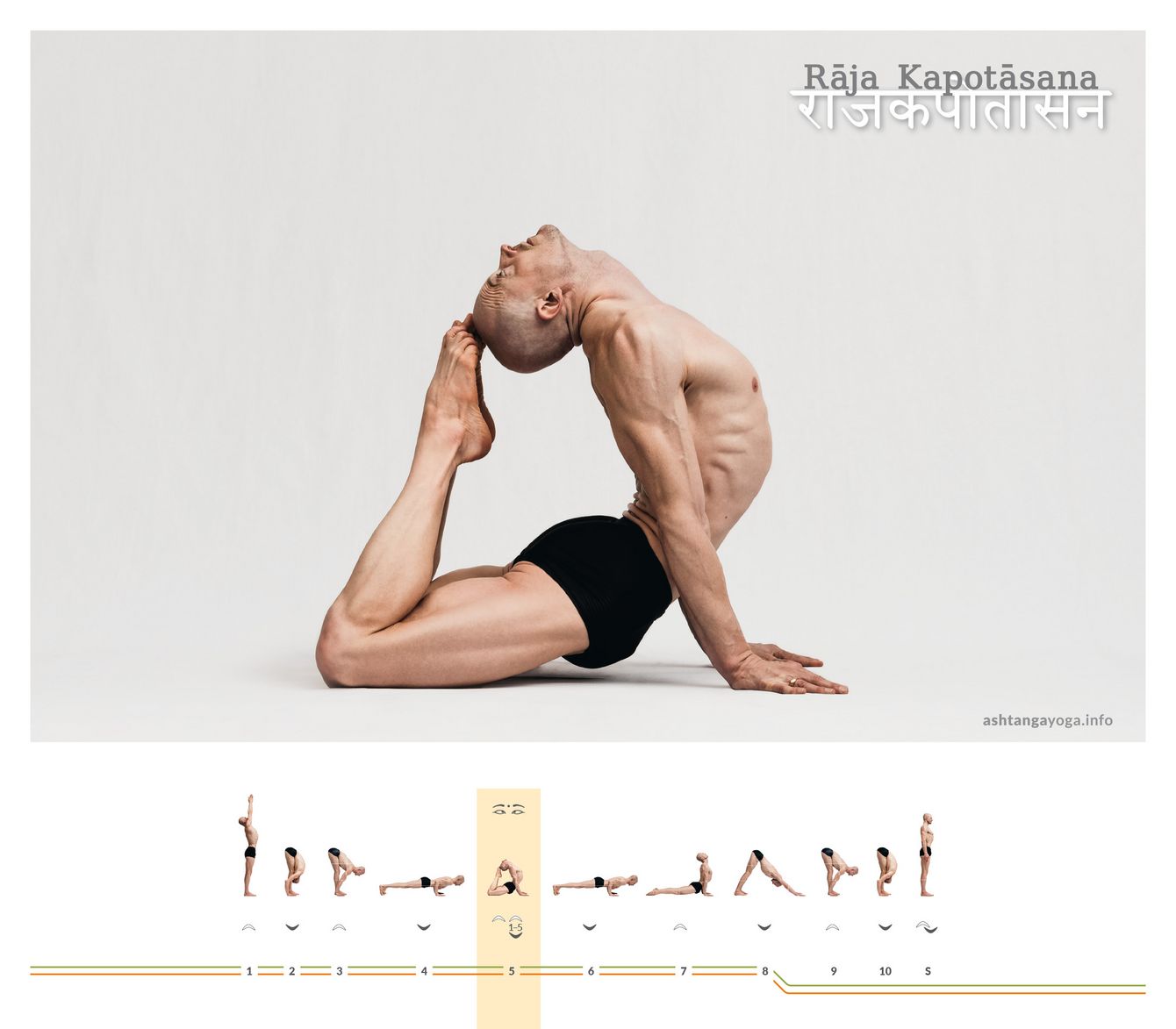
Rāja Kapotāsana: The Royal Pigeon
Mythology: Kapota means “pigeon.” In Indian tradition, the pigeon often symbolizes devotion, gentleness, and the trust to open without breaking. Rāja (“royal”) shifts the meaning: it points to mature, guided devotion—not passive, but consciously held. The “royal pigeon” becomes an image of dignity within vulnerability: you open the heart space fully while staying inwardly collected and clear. The myth offers a practical cue: spaciousness arises when courage and measure work together.
In the traditional count: Begin directly from the hold in Adho Mukha Śvānāsana in the preceding sequence.
Vinyāsa 4 – Inhalation, Exhalation:
On the inhalation, come into the high plank, then on the exhalation lower with control into a prone position.
Vinyāsa 5 – Inhalation, 5 breaths, Inhalation:
On the inhalation, lift the torso into a deep backbend. Bend the knees and bring the feet toward the head. Open chest and shoulders and move into the final form of Rāja Kapotāsana. Remain until the fifth exhalation. Inhale once more here.
Tip: The posture becomes much easier if—before lifting the torso—you place the hands far back beside the hips. Support yourself on the fingertips for a little extra height. Then roll into the backbend starting from the head and consciously lift the pelvis off the floor. With the elbows bent, draw the knees forward along the ground; this makes it easier to bend them. Next, actively engage the spinal extensors and broaden the heart space so the backbend deepens from the top down. Finally, press with the heels as if you wanted to draw them toward the buttocks. If needed, you can use one foot to “nudge” the other a little closer.
Vinyāsa 6 – Exhalation:
Release the posture with control and lower back to prone. Still within the same exhalation, press up and transition into Caturaṅga Daṇḍāsana.
Vinyāsa 7–8:
Follow the familiar vinyāsa flow until you arrive again in Adho Mukha Śvānāsana.
In the traditional count: From here, continue directly into the next posture.
Effect: Rāja Kapotāsana deeply stretches the front of the hips (hip flexors/quadriceps), opens the chest and shoulder girdle, and at the same time strengthens the back line and glutes so the backbend is supported
Fotograf: Richard Pilnick - www.richardpilnick.com
Messages and ratings