

 Dr. Ronald Steiner

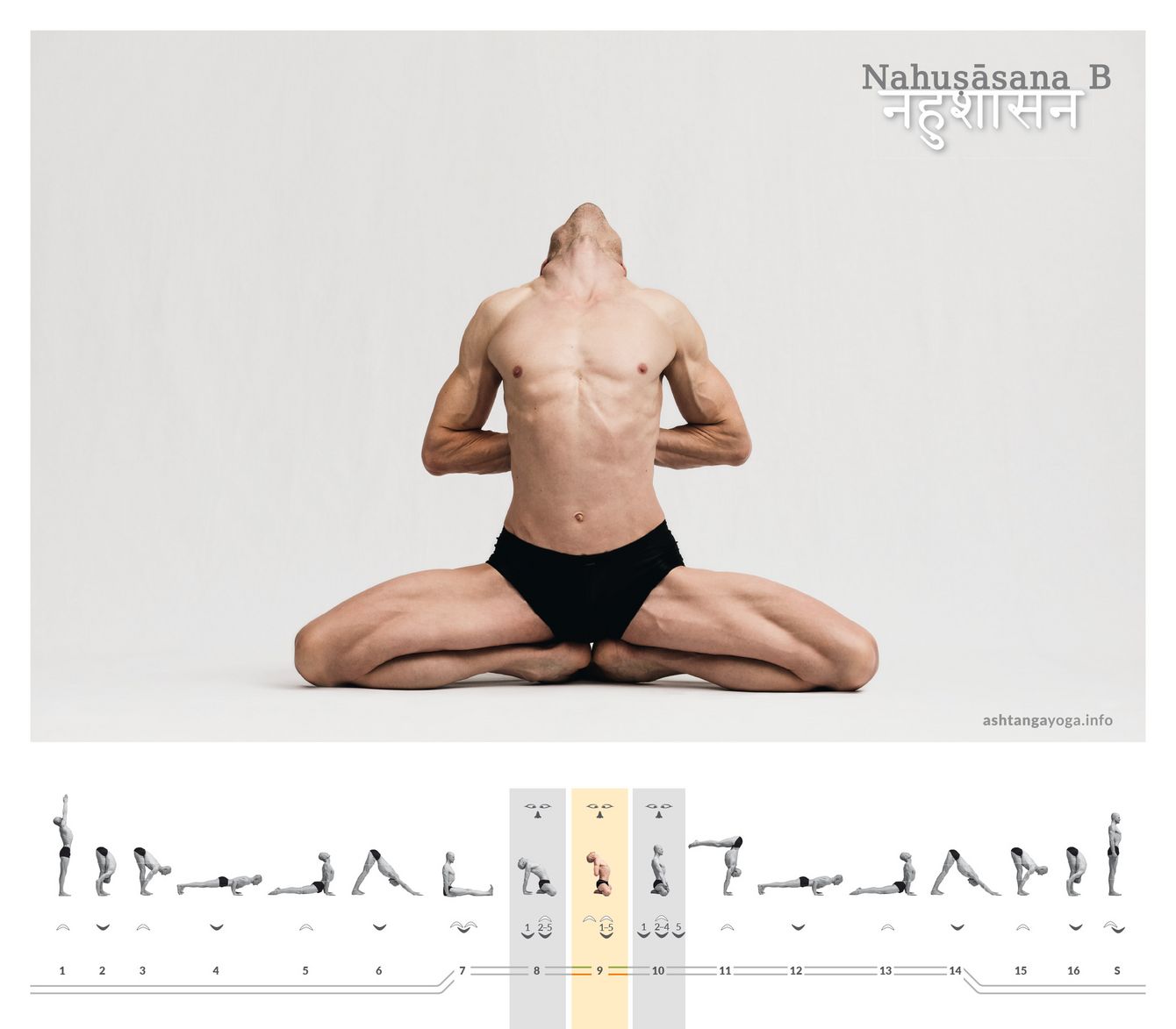
Nahuṣāsana B: The posture of Nahuṣa
Mythology: In a central episode told in epic and Purāṇa traditions, the human king Nahuṣa is appointed ruler of heaven in place of Indra. The new power becomes a test—and Nahuṣa fails it. He grows arrogant, desires Śacī (Indrāṇī), Indra’s consort, and begins to treat his position as property. In his grandiosity, he demands to be carried in a palanquin by great Ṛṣi, as if wisdom and ascetic power should “lift” him. When the palanquin wobbles, he presses them to hurry and insults the Ṛṣi Agastya; in some versions he even kicks him. Agastya then curses Nahuṣa to fall and continue to exist as a sarpa/nāga. This is not a devaluation of the Nāgas—who can be holy and powerful—but a symbol of loss of status: arrogance destroys inner order and pulls one downward.
In the traditional count: Begin directly from the previous posture.
Vinyāsa 9 – Exhalation, 5 breaths:
Bring for Nahuṣāsana B with the inhalation the hands together behind the back between the shoulder blades. This intensifies spaciousness in the heart area. Lift the gaze upward and remain until the fifth exhalation.
Tip: In Nahuṣāsana B, shoulder organization is decisive. Press the hands actively against each other without letting the shoulders creep up toward the ears. Broaden the chest forward and up, while keeping a subtle tension between the hyoid bone and the sternum so the cervical spine stays long and stable. The upward gaze then becomes uplift—rather than a neck hinge.
In the traditional count: From here, the vinyāsa continues directly into the next posture.
Effect: Nahuṣāsana B increases the shoulder-girdle opening compared to Nahuṣāsana A and demands more uplift through the upper back. Practiced cleanly, the posture feels “tall” and calm, and the hand position supports further opening of the heart space.
Fotograf: Richard Pilnick - www.richardpilnick.com
Messages and ratings