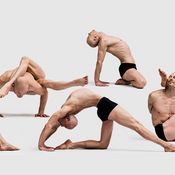
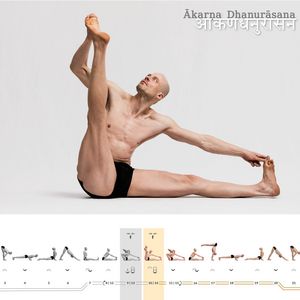
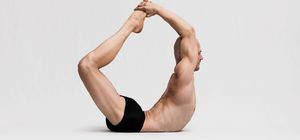
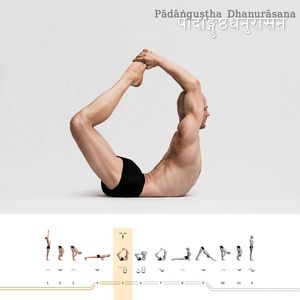
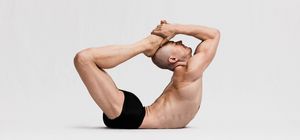
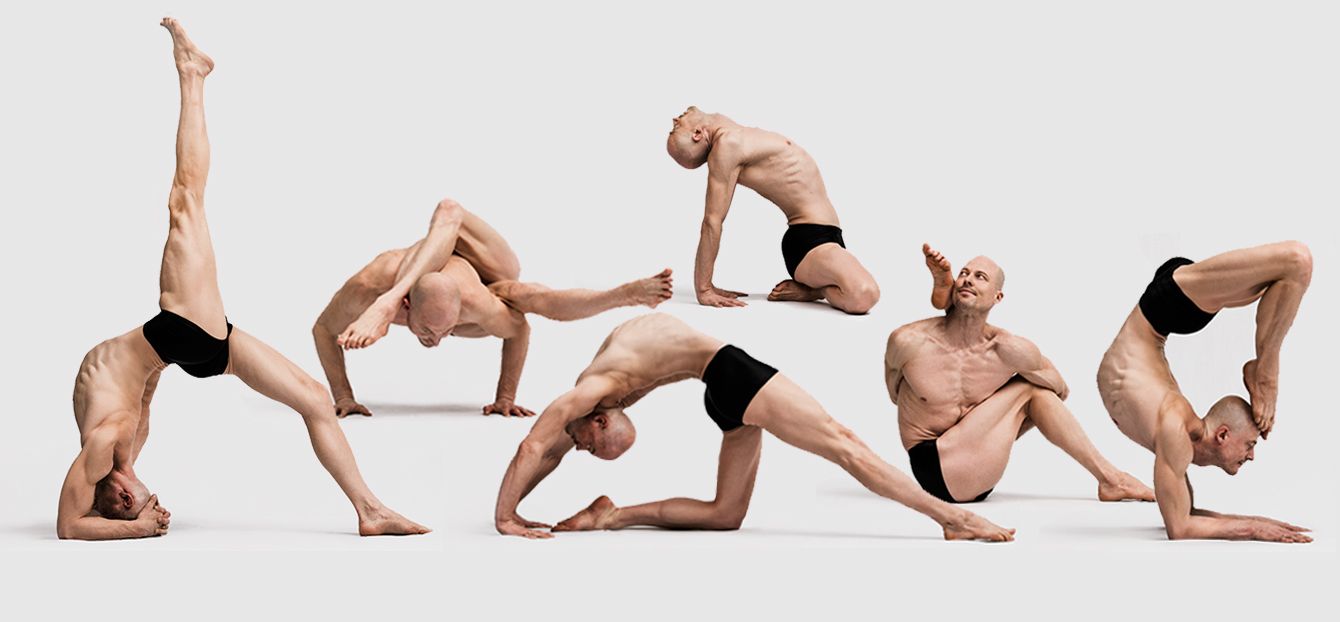
The poses in the third series of Aṣṭāṅga Yoga may appear acrobatic, but they create a sense of "sublime tranquility," which explains the name of the series: Sthira Bhaga.

Traditional Practice Series
Mūla Bandhāsana Mūla Bandhāsana

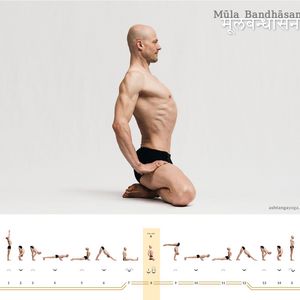
Mūla Bandhāsana: The posture of the root lock

Like Baddha Koṇāsana, but with the feet pointing backward: Mūla Bandhāsana looks simple, yet it demands precision.

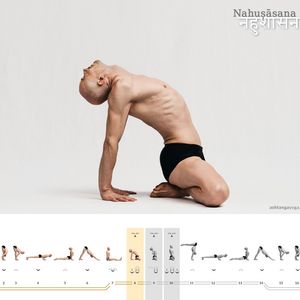
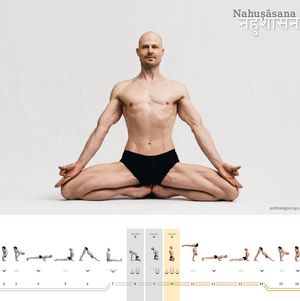
Nahuṣāsana A Nahuṣāsana A

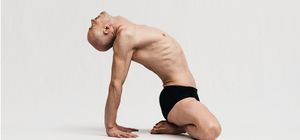
Nahuṣāsana A: The posture of Nahuṣa

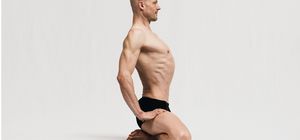
Like Mūla Bandhāsana, Nahuṣāsana A is built on the same foundation. Here, however, the hands support behind the back and the gaze lifts upward. This symbolizes alignment with a higher ideal.

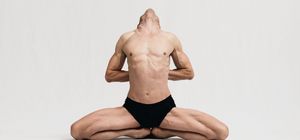
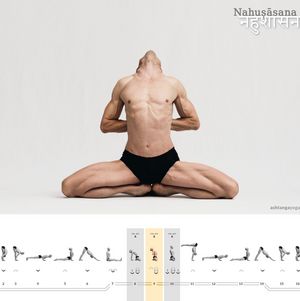
Nahuṣāsana B Nahuṣāsana B

Nahuṣāsana B: The posture of Nahuṣa

Like Nahuṣāsana A, Nahuṣāsana B is built on Mūla Bandhāsana. The hands now join behind the back between the shoulder blades, and the gaze lifts upward. The posture symbolizes devotion and opening.

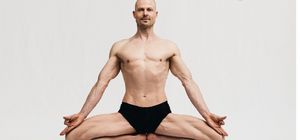
Nahuṣāsana C Nahuṣāsana C

Nahuṣāsana C: The posture of Nahuṣa

Nahuṣāsana C is the third of three almost identical postures built on Mūla Bandhāsana. The hands now rest meditatively in Cinmudrā on the knees, and the gaze is lowered again.

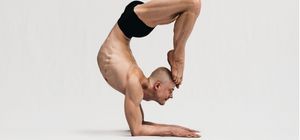
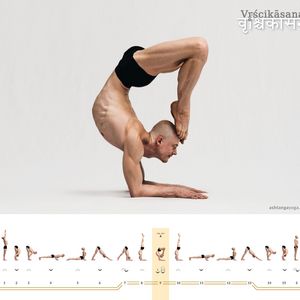
Vṛścikāsana Vṛścikāsana

Vṛścikāsana: The Scorpion

From forearm stand into a backbend: Vṛścikāsana combines strength and control with wide opening. The posture becomes stable when the base carries quietly and the depth arises from the chest.

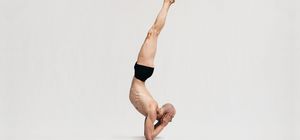
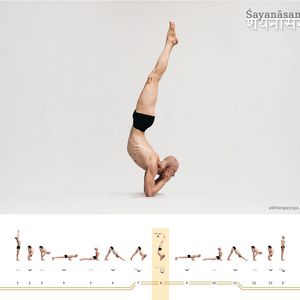
Śayanāsana Śayanāsana

Śayanāsana: The posture of repose

From forearm balance into a seemingly “quiet” vertical line: Śayanāsana requires stability in the shoulder girdle and a clear axis so that balance arises from calm.

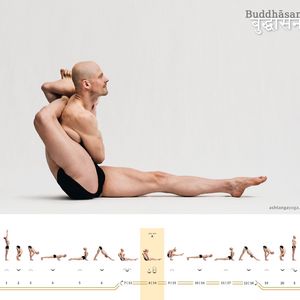
Buddhāsana Buddhāsana

Buddhāsana: The posture of the Buddha

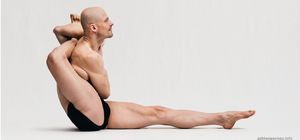
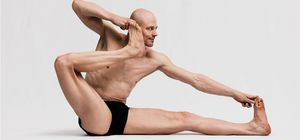
One leg not only goes behind the head, but behind the opposite shoulder: Buddhāsana demands deep hip opening and shoulder mobility. The posture becomes stable when you create space in the hip and keep the spine long.

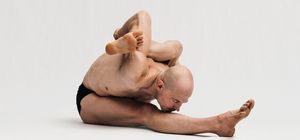
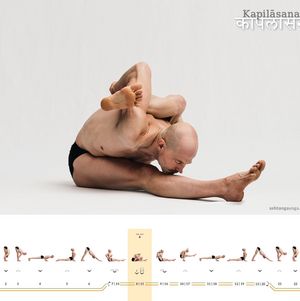
Kapilāsana Kapilāsana

Kapilāsana: The posture of Kapila

Kapilāsana expands Buddhāsana by adding a forward fold and an additional bind. In this way, the posture combines deep hip opening and shoulder-girdle mobility with a clear forward bend.

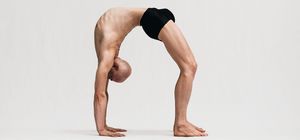
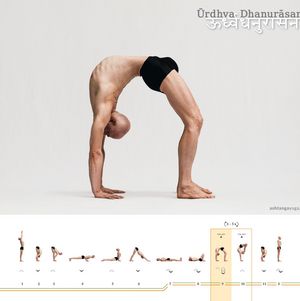
Urdhva Dhanurasana Urdhva Dhanurasana

Ūrdhva Dhanurāsana: Upward-Facing Bow

Ūrdhva Dhanurāsana is a backbend with an upward-facing front body, defined only by the touch of hands and feet to the ground - an upward-facing bow.

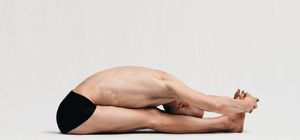
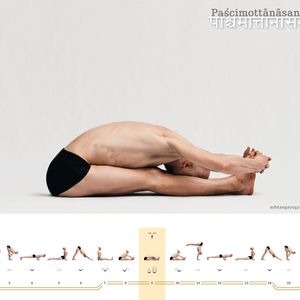
Pashchimottanasana Pashchimottanasana

Paścimottānāsana: Seated Forward Bend

In the third series of Aṣṭāṅga Yoga, the practice concludes after the backbend with the classic "Seated Forward Bend" - Paścimottānāsana.

Each week anew!

Week by week, we release poses from the third series of Aṣṭāṅga Yoga. With its hip openers and spectacular arm balances, the third series is the most impressive of Aṣṭāṅga Yoga.

Enjoy!