
 Dr. Ronald Steiner

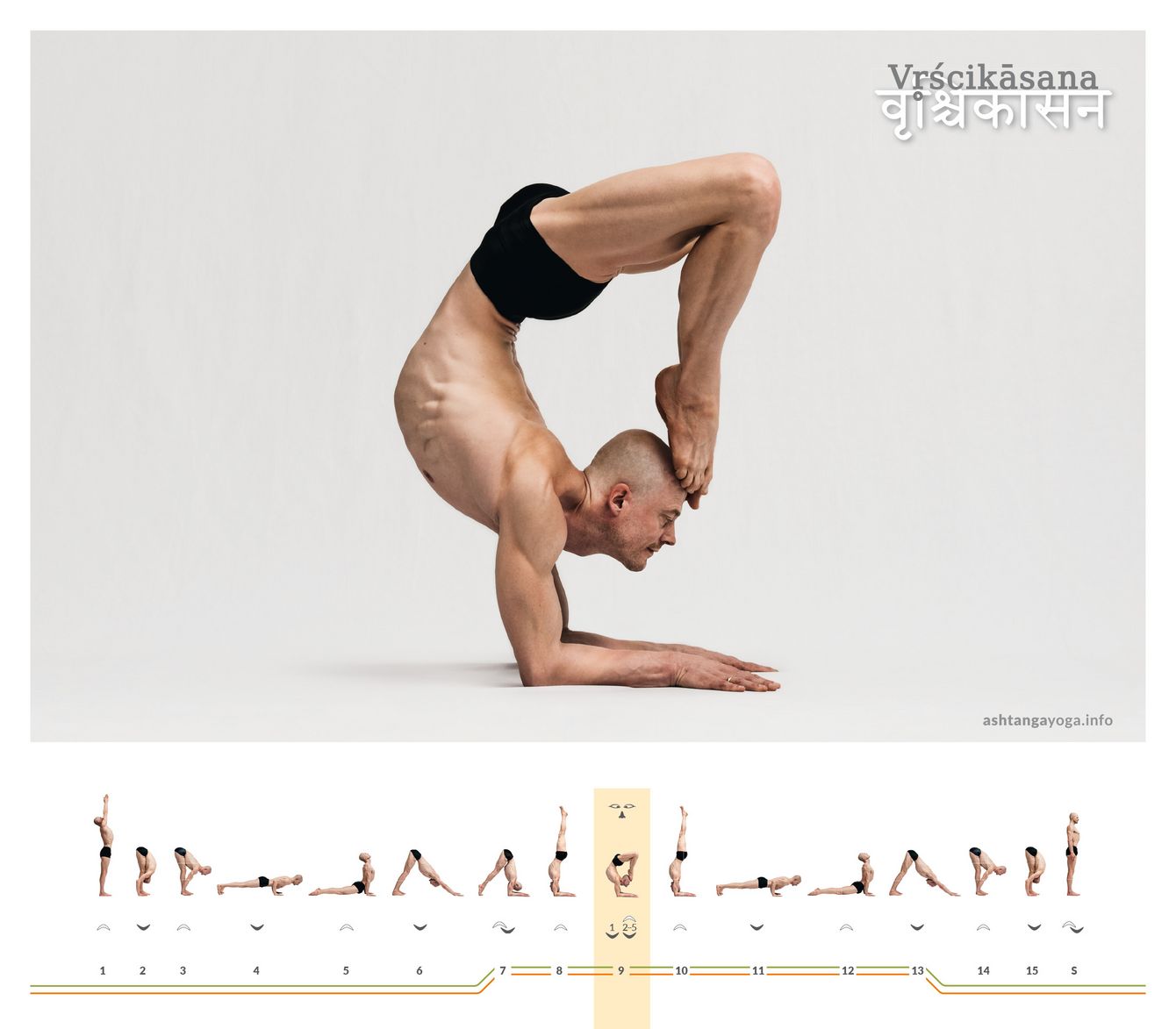
Vṛścikāsana: The Scorpion
Mythology: Vṛścika means “scorpion.” Its sting is an image of concentrated, potentially “poisonous” power—energy that can harm when it acts unconsciously, and that transforms when it is guided. A fitting parallel appears in the motif of poison in the Samudra Manthana: while the Ocean of Milk is churned, the deadly poison Hālāhala rises, and Śiva takes it upon himself to preserve balance. The image is clear: not every “poison” needs to go outward; it can be held, transformed, and guided into clarity. This is exactly what Vṛścikāsana reflects—intensity remains contained and becomes order.
In the traditional count: Begin directly from the hold in Adho Mukha Śvānāsana from the previous sequence.
Vinyāsa 7 – Inhalation, exhalation:
On the inhalation, jump forward between the hands and come down with control onto the forearms. Place the forearms shoulder-width on the floor and set up a stable base.
Vinyāsa 8 – Inhalation:
On the inhalation, come into forearm stand and stabilize the line upward.
Vinyāsa 9 – Exhalation, 5 breaths:
On the exhalation, deepen the backbend and find Vṛścikāsana. Remain until the fifth exhalation.
Tip: Build the backbend “from above”: sternum forward and up, shoulder blades organized, neck long. If you simply hinge in the lumbar spine, it may look dramatic, but it quickly becomes sloppy and risky. Keep the forearms active and press the hands firmly into the floor—optionally with a slight intention of moving them toward each other. That can sound paradoxical, because the hands tend to slide inward. Yet when you deliberately “slide” them toward each other into the floor, friction increases and the base often becomes more stable. Draw the ribs gently inward and upward so the load does not tip into the neck. Shift the focus away from “feet to the head” and toward “chest wide,” and the shape becomes sustainable.
Vinyāsa 10 – Inhalation:
On the inhalation, return to forearm stand.
Vinyāsa 11 to 13:
Follow the vinyāsa flow you already know until you arrive in Adho Mukha Śvānāsana.
Tip: Do not drop from forearm stand into Caturaṅga Daṇḍāsana like a felled tree. First lower the straight legs in front of you while maintaining balance. When the toes hover just above the floor, lengthen strongly from the hips—this creates a light upward impulse. In that moment you can relatively easily “roll” from the forearms onto the palms and land in Caturaṅga Daṇḍāsana with control.
In the traditional count: From here, continue directly into the movement flow of the next posture.
Effect: Vṛścikāsana strengthens the forearms, shoulders, and the entire shoulder girdle, while the thoracic spine and hip flexors must open deeply. Practiced cleanly, it develops precise load transfer, a stable backbend, and a very clear focus.
Fotograf: Richard Pilnick - www.richardpilnick.com
Messages and ratings