
 Dr. Ronald Steiner

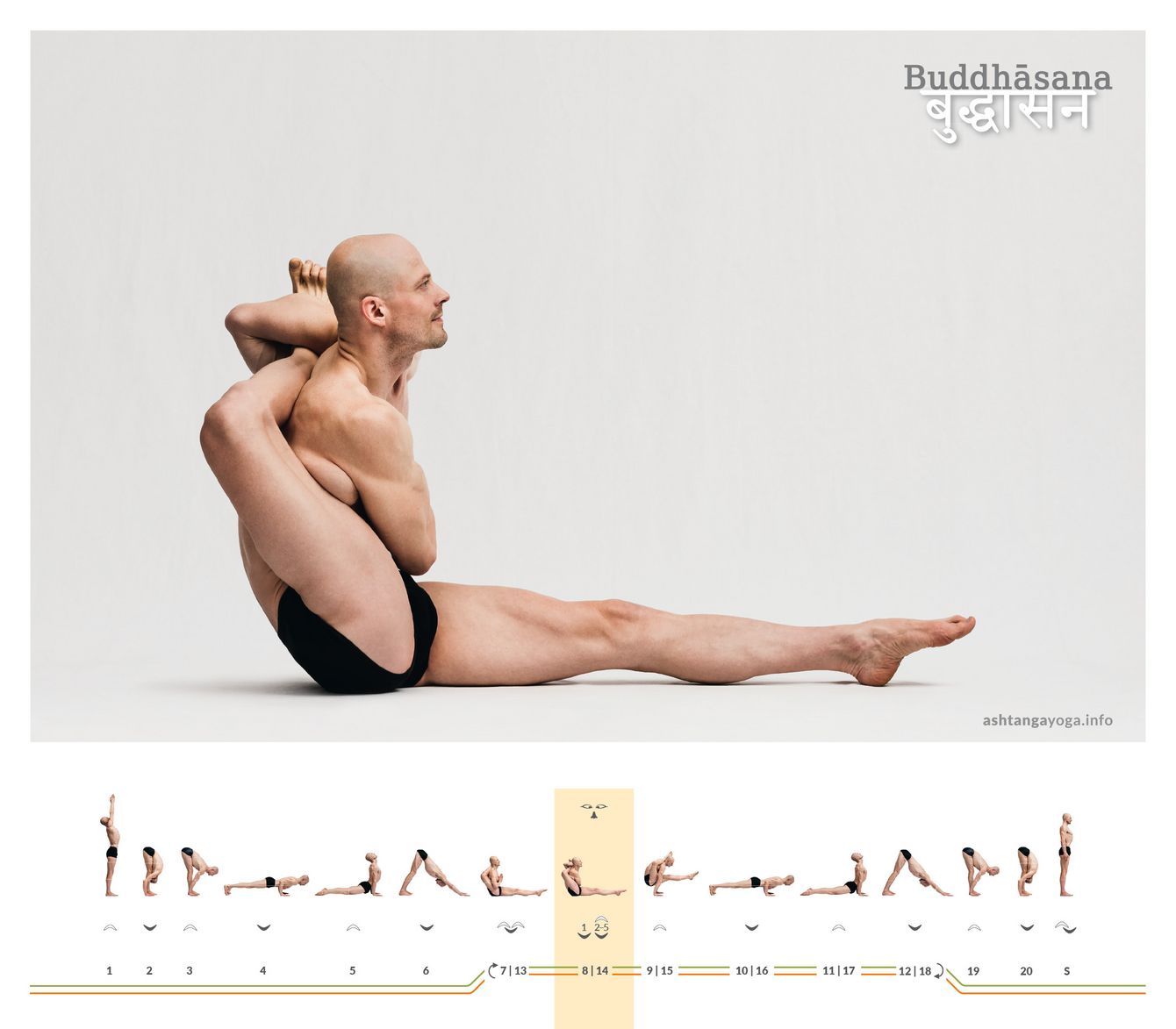
Buddhāsana: The posture of the Buddha
Mythology: The name refers to the Buddha, literally “the Awakened One”—not as the label of a religion, but as an image of an inner state. In the classical stories, Siddhārtha Gautama leaves the protected world of his palace because he realizes that wealth does not remove suffering. He encounters sickness, aging, and death and understands: without clarity, any outer “success” remains fragile. He seeks radical austerity, then recognizes its limits and finds the middle way: neither indulgence as escape nor harshness as an end in itself, but wakefulness, measure, and alignment. Under the Bodhi tree he remains seated while “Māra”—a symbol of fear, doubt, craving, and inner distraction—tests him. He does not flee and he does not fight in the outer sense; he stays still, clear, and collected until insight arises.
This imagery works as a guiding motif: uprightness without rigidity, calm without passivity. Buddhāsana points to the same quality: even in an intense form, the core can remain awake. You observe what appears as pressure, resistance, or habit and bring it into order through breath and alignment. “Awakening” becomes practical: not producing more tension, but holding the right tension—and releasing the rest.
In the traditional count: Begin directly from the hold in Adho Mukha Śvānāsana from the previous sequence.
Vinyāsa 7 – Inhalation, exhalation, inhalation:
On the inhalation, jump forward. Swing the right leg outside the right arm. On the exhalation, place the right foot behind the head. Complete the movement on the inhalation by straightening the left leg and bringing the hands together in front of the heart.
Vinyāsa 8 – Exhalation, 5 breaths:
On the exhalation, reach with the right hand under the left armpit to the right shin. Draw the right foot deeper along the back and then forward under the left armpit. Circle the left upper arm back over the instep of the right foot and grasp the right wrist with the left hand. Remain in Buddhāsana until the fifth exhalation.
Tip: Drawing the right foot forward under the left armpit is demanding while sitting upright. It often becomes easier if—right after taking the right-hand grip on the right shin—you lean diagonally down to the left. Support yourself on the left arm to the side, with the elbow bent about 90 degrees. With this support, it is much easier to pull the instep of the right foot forward under the left armpit. Then you can sit back up.
Vinyāsa 9 – Inhalation:
At the very end of the fifth exhalation, release the bind. Let the right foot slide out of the armpit until it returns behind the head. Place the hands on the floor and lift up on the inhalation.
Vinyāsa 10 to 12:
Follow the vinyāsa flow you already know until you are holding in Adho Mukha Śvānāsana.
Vinyāsa 13 to 18:
Repeat the entire sequence on the other side, then follow the familiar vinyāsa flow again until you are holding in Adho Mukha Śvānāsana.
In the traditional count: From here, continue directly into the movement flow of the next posture.
Effect: Buddhāsana deeply opens external rotation in the hip, mobilizes the glutes and groin area, and at the same time demands shoulder mobility. Practiced cleanly, it improves hip mobility and body control.
Fotograf: Richard Pilnick - www.richardpilnick.com
Messages and ratings