
 Dr. Ronald Steiner

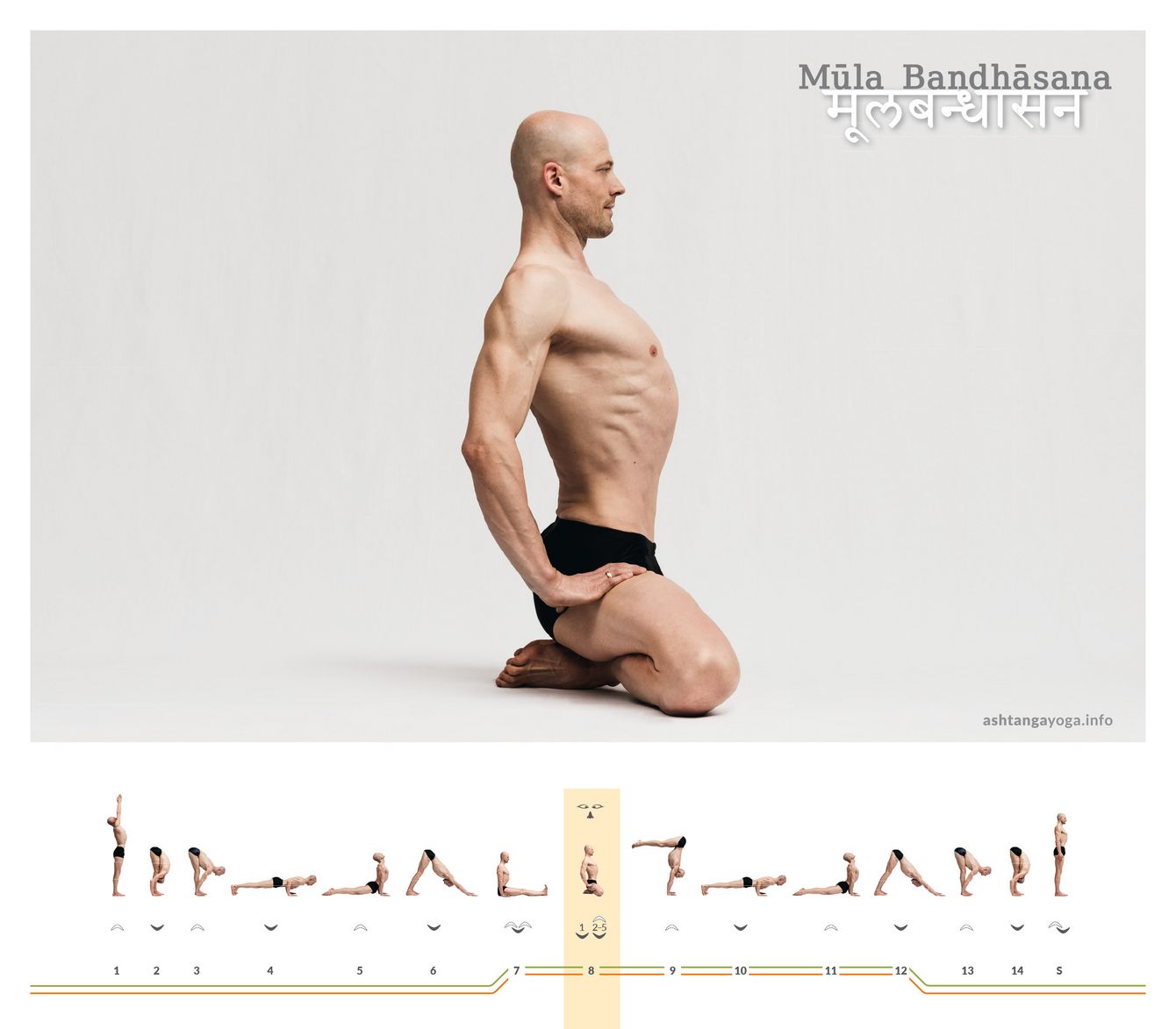
Mūla Bandhāsana: The posture of the root lock
Mythology: Mūla means “root,” and bandha means “lock” or “binding.” The idea is the ability to avoid scattering energy and instead gather and guide it at the base. In the Haṭha Yoga tradition, bandha techniques represent inner regulation through attention, visualization, and subtle muscular activity. Mūla Bandhāsana reminds you that every uplift needs a root—and that inner gathering often achieves more than outer movement.
In the traditional count: Begin directly from the hold in Adho Mukha Śvānāsana from the previous sequence.
Vinyāsa 7 – Inhalation, exhalation, inhalation:
On the inhalation, jump forward between the hands. On the exhalation, come into a seated position with control. Complete the movement by straightening the legs and inhaling.
Vinyāsa 8 – Exhalation, 5 breaths:
On the exhalation, bring the feet together as in Baddha Koṇāsana. Then place the balls of the feet on the floor in front of the pelvis and roll with control over the feet. Support yourself by pressing the hands against the thighs. Remain in Mūla Bandhāsana until the fifth exhalation.
Tip 1: Rolling over the feet can feel quite intimidating at first. It helps to build the position slowly “from behind”: place the feet behind the pelvis, similar to Tryaṅga Mukhaikapāda Paścimottānāsana, but with the knees falling outward and the ankles flexed. Lift the pelvis and carefully slide forward onto the heels.
Tip 2: Once you’ve gained some confidence through Tip 1, you can fold forward from Baddha Koṇāsana as you know from the First Series to prepare the hips. Then sit back up and place both feet as in Jānu Śīrṣāsana C. Take your time there. From that setup, gradually shift the pelvis forward over the feet and then turn the feet back.
Vinyāsa 9 – Inhalation:
At the very end of the fifth exhalation, place the hands on the floor in front of the shins. On the inhalation, lift up into a “tuck handstand.”
Vinyāsa 10 to 12:
Follow the vinyāsa flow you already know until you are holding in “Downward-Facing Dog.”
In the traditional count: From here, continue directly into the movement flow of the next posture.
Effect: Mūla Bandhāsana is an intense hip opener. The posture trains pelvic-floor awareness, upright alignment, and the ability to regulate pressure. Practiced cleanly, it improves stability at the center and has a balancing effect on the spine. If you compensate, the load quickly shifts into the knees—so give yourself time and develop the posture step by step.
Fotograf: Richard Pilnick - www.richardpilnick.com
Messages and ratings