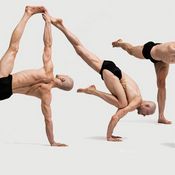
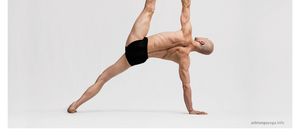
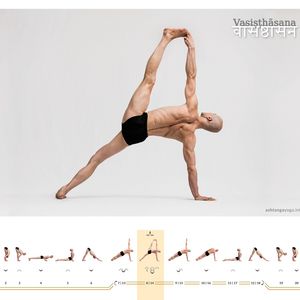
Vasiṣṭhāsana: Pose Named after Vasiṣṭha Dr. Ronald Steiner The "Pose Named after Viasiṣṭha" is a powerful side plank pose where the arm and leg of the not supporting side gracefully reach towards the sky.
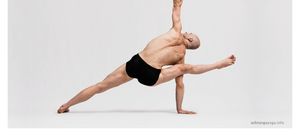
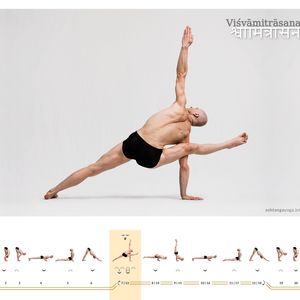
Viśvāmitrāsana: Pose Named after Viśvamitra Dr. Ronald Steiner The "Pose Named after Viśvamitra" is a spectacular side plank pose where the lower leg extends forward over the supporting arm.
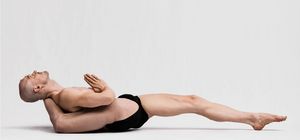
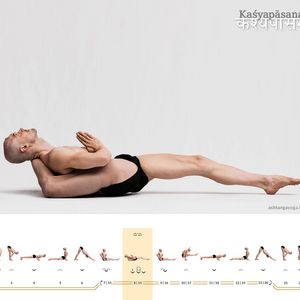
Kaśyapāsana: Pose Named after Kaśyapa Dr. Ronald Steiner The "Pose Named after Kaśyapa" is the first of five poses with one foot behind the head. In this variation, we are in a supine position.
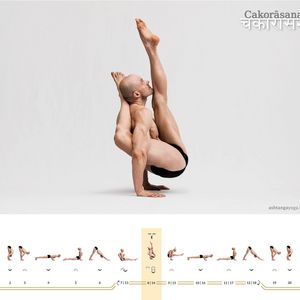
Cakorāsana: A pose named according to the Cakora-bird Dr. Ronald Steiner The posture named after the Cakora-bird is an arm balance, with one foot behind the head, and the other leg pointing vertically upwards.
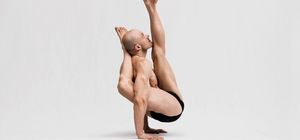
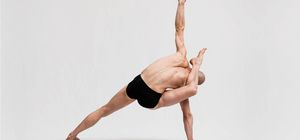
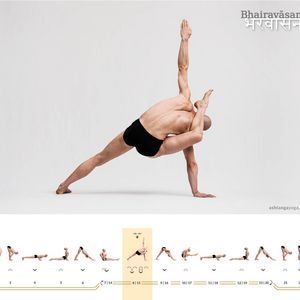
Bhairavāsana: Pose named after Bhairava Dr. Ronald Steiner The posture named after Bhairava combines a side plank with another opportunity to place the foot behind the head.
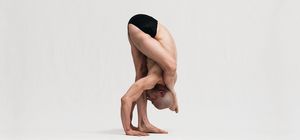
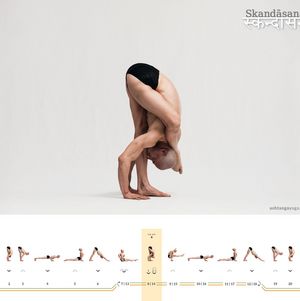
Skandāsana: Pose named after Skanda Dr. Ronald Steiner In the pose named after Skanda, one leg is positioned behind the head while the practitioner performs a standing forward bend.
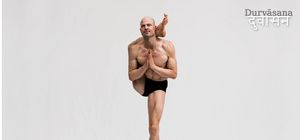
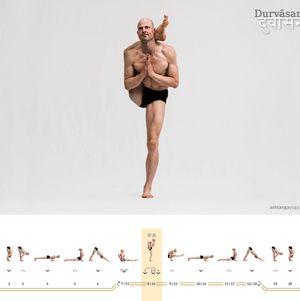
Durvāsana: Pose named after Durva Dr. Ronald Steiner The pose named after Durva is a one-legged balancing position. In an upright stance, the other foot is positioned behind the head.
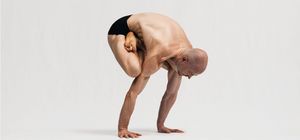
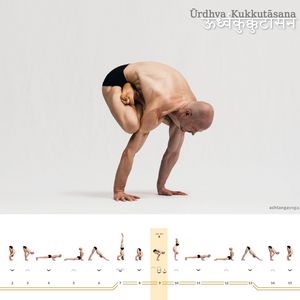
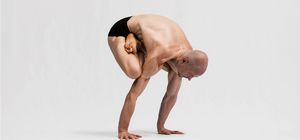
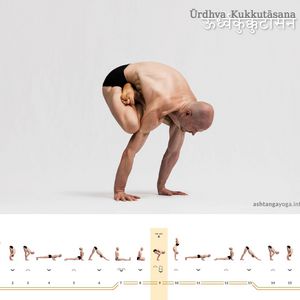
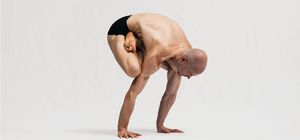
Ūrdhva Kukkuṭāsana A: The Pose of the 'Upward Rooster' Dr. Ronald Steiner The pose of the 'Upward Rooster,' Ūrdhva Kukkuṭāsana, is an arm balance position in which the folded legs in the Lotus pose are supported on the upper arms.
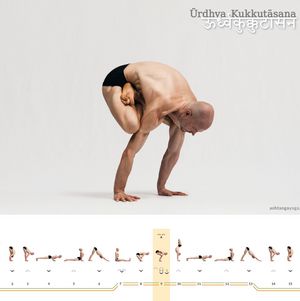
Ūrdhva KukkuṭāsanaB: The Pose of the 'Upward Rooster' Dr. Ronald Steiner In the 'Upward-facing Rooster' pose version B (Ūrdhva Kukkuṭāsana B), energy is directed upwards while the legs in lotus balance on the upper arms. This variation requires heightened attention and a fine sense of balance.
Ūrdhva KukkuṭāsanaB: The Pose of the 'Upward Rooster' Dr. Ronald Steiner In the 'Upward-facing Rooster' pose version B (Ūrdhva Kukkuṭāsana B), energy is directed upwards while the legs in lotus balance on the upper arms. This variation requires heightened attention and a fine sense of balance.
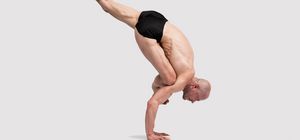
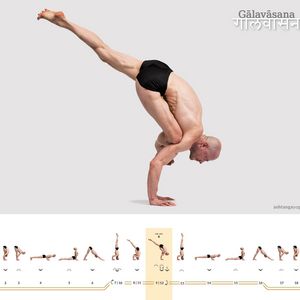
Gālavāsana: Pose dedicated to Gālava Dr. Ronald Steiner The pose dedicated to Gālava, Gālavāsana, is an arm balance where one shin rests on the upper arms while the other leg extends upward in line with the torso.
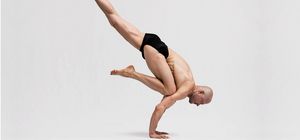
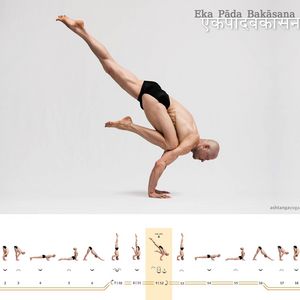
Eka Pāda Bakāsana A: Einbeinige-Kranich-Haltung Dr. Ronald Steiner Eka Pāda Bakāsana, oder Einbeinige-Kranich-Haltung, ist, in Variante A, eine fortgeschrittene Yoga-Pose, die auf den Armen balanciert. Ein Knie ist am Ellenbogen abgestützt, das andere Bein himmelwärts gestreckt.
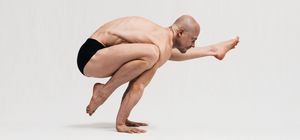
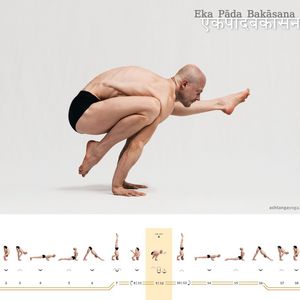
Eka Pāda Bakāsana B: One-Legged Crane Pose Dr. Ronald Steiner Eka Pāda Bakāsana, or One-Legged Crow Pose, is, in variation B, an advanced yoga pose balancing on arms. One knee is supported on an elbow and the other leg extended forward.
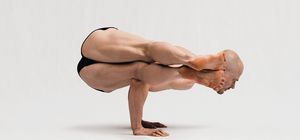
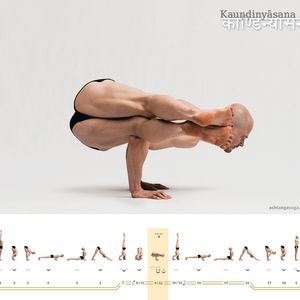
Kauṇḍinyāsana A: Position dedicated to Kauṇḍinya Dr. Ronald Steiner Kauṇḍinyāsana, or the position dedicated to Kauṇḍinya, in variant A, is a posture balanced on the arms. Both legs together are pointing to one side.
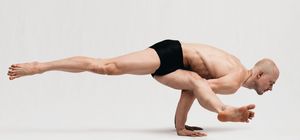
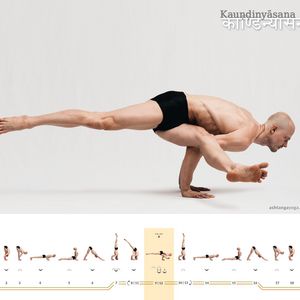
Kauṇḍinyāsana B: Position dedicated to Kauṇḍinya Dr. Ronald Steiner Kauṇḍinyāsana, or the position dedicated to Kauṇḍinya, in variant B, is a posture balanced on the arms. One leg crosses forward, the other extends backwards and up.
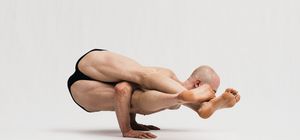
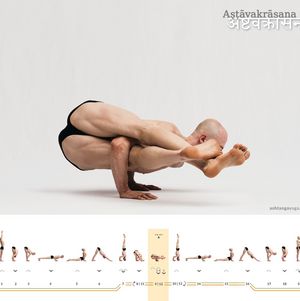
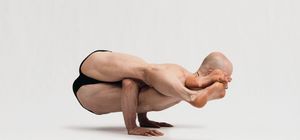
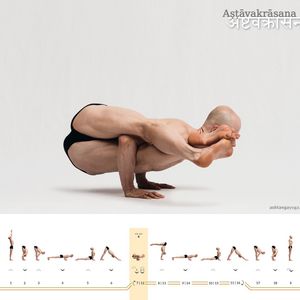
Aṣṭāvakrāsana A: Pose of the Sage Aṣṭāvakra Dr. Ronald Steiner Aṣṭāvakrāsana A or the position dedicated to the sage Aṣṭāvakra is an arm balance with legs entwined to the side.
Aṣṭāvakrāsana A: Pose of the Sage Aṣṭāvakra Dr. Ronald Steiner Aṣṭāvakrāsana A or the position dedicated to the sage Aṣṭāvakra is an arm balance with legs entwined to the side.
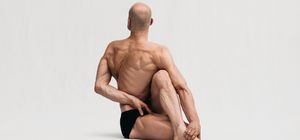
Pūrṇa Matsyendrāsana: The complete pose named after Matsyendranātha Dr. Ronald Steiner Pūrṇa Matsyendrāsana is a seated twist in which one leg is in Lotus.
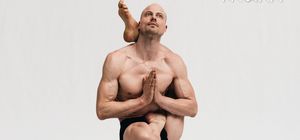
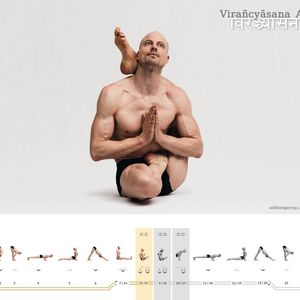
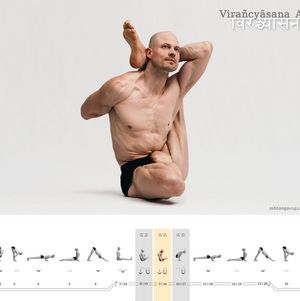
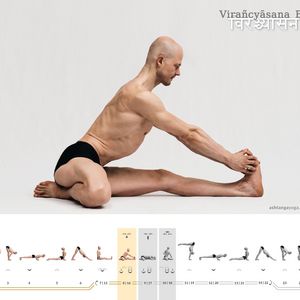
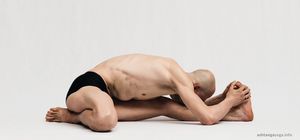
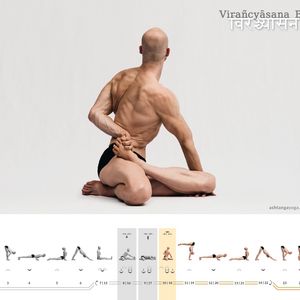
Virañcyāsana A1: Posture of Virañcya Dr. Ronald Steiner One leg in Lotus, the other behind the head: Virañcyāsana A1 challenges hips, knees, and focus—order emerges when breath and alignment work together with precision in space.
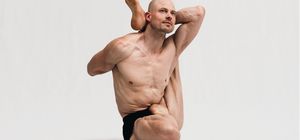
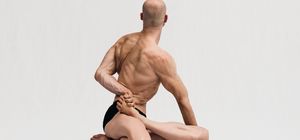
Virañcyāsana A2: Posture of Virañcya Dr. Ronald Steiner From Virañcyāsana A1, A2 emerges: the arms bind behind the back and the gaze lifts. Precise alignment makes the form stable—not strength, but organization carries the posture.
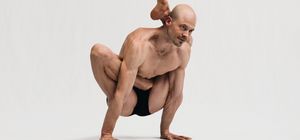
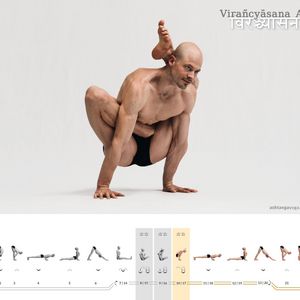
Virañcyāsana A3: Posture of Virañcya Dr. Ronald Steiner From a knot, buoyancy emerges: Lotus and “leg behind the head” become an arm balance. Structure lifts you—in Virañcyāsana A3, breath, bandha, and alignment carry the form.
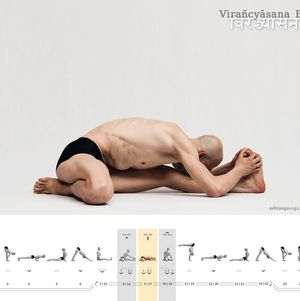
Virañcyāsana B1: Posture of Virañcya Dr. Ronald Steiner Grounding, uplift, an inner “seal”: Virañcyāsana B1 draws you inward and turns apparent stillness into a clear, weight-bearing presence in the body.
Virañcyāsana B2: Posture of Virañcya Dr. Ronald Steiner From gathering comes depth: Virañcyāsana B2 sharpens focus and stretching capacity when you choose length over pressure and use each exhalation as a conscious softening.
Virañcyāsana B3: Posture of Virañcya Dr. Ronald Steiner A shift of perspective instead of habit: Virañcyāsana B3 demands both stability and mind—order arises here not only straight ahead, but also through an intelligent turn.
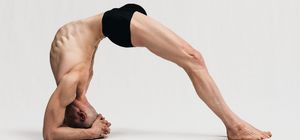
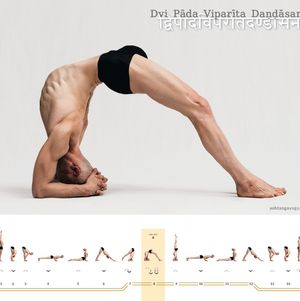
Dvi Pāda Viparīta Daṇḍāsana: the inverted staff Dr. Ronald Steiner Two feet ground, the forearms support: Dvi Pāda Viparīta Daṇḍāsana demands a deep backbend initiated from the thoracic spine and strong legs that stay firmly rooted to the floor.
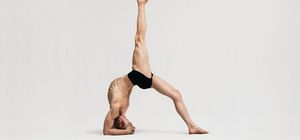
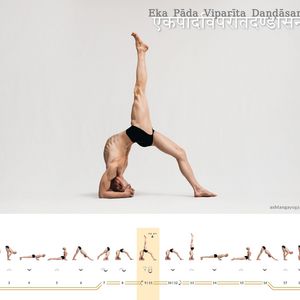
Eka Pāda Viparīta Daṇḍāsana: the inverted staff with one leg Dr. Ronald Steiner One leg grounds, the other rises: Eka Pāda Viparīta Daṇḍāsana demands a stable backbend initiated from the thoracic spine—and precision so the asymmetry doesn’t lever you out of your axis.
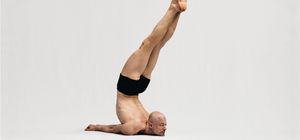
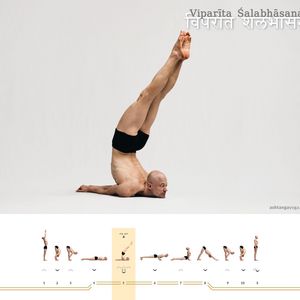
Viparīta Śalabhāsana: The inverted locust Dr. Ronald Steiner Reaching the legs high up from a prone position: Viparīta Śalabhāsana demands posterior-chain strength and control so that lift comes from length—not from pressure in the neck.
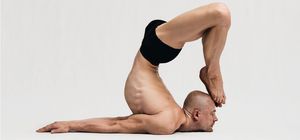
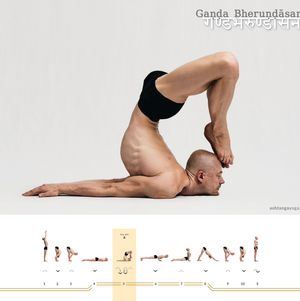
Gaṇḍa Bheruṇḍāsana: The two-headed bird Dr. Ronald Steiner From a prone position, place the feet beside the head: Gaṇḍa Bheruṇḍāsana demands a deep backbend and calm control. It creates an intense openness of the heart space and a stable foundation.
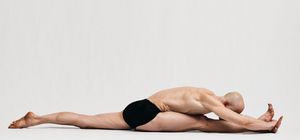
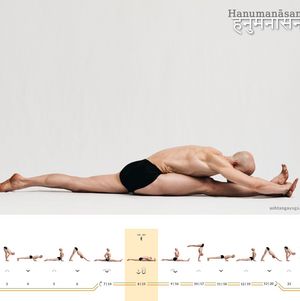
Hanumānāsana: Hanumān’s Split Dr. Ronald Steiner A long step that feels like a leap: Hanumānāsana recalls Hanumān’s jump across the sea. Spaciousness arises when focus and breath remain calm.
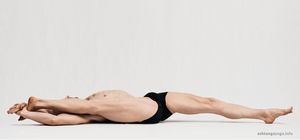
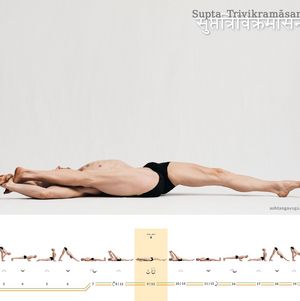
Supta Trivikrāmāsana: The reclining Trivikrama Dr. Ronald Steiner Lying on the floor, bring one leg behind the head: Supta Trivikrāmāsana requires hip opening and calm steadiness. It recalls Trivikrama’s mythic “great step.”
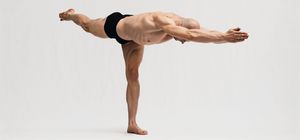
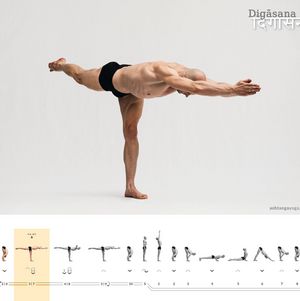
Digāsana A: The posture of the directions Dr. Ronald Steiner One leg bears the weight, the other extends far back, and the arms reach forward at shoulder height: Digāsana A trains balance and spatial orientation. The posture becomes steady when the pelvis and breath stay calm.
Digāsana B: The posture of the directions Dr. Ronald Steiner One leg bears the weight, the torso becomes horizontal, and the arms open to the sides: Digāsana B trains balance with clear width. The posture becomes steady when you hold axis and spaciousness at the same time.
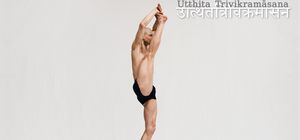
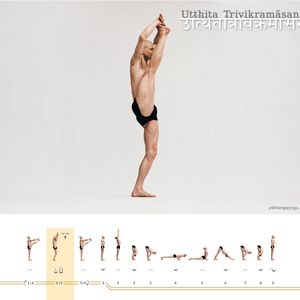
Utthita Trivikrāmāsana: The standing Trivikrama Dr. Ronald Steiner One leg bears the weight while the other rises high: Utthita Trivikrāmāsana combines balance with a maximal leg line. The posture becomes steady when you grow upward and keep the pelvis quiet.
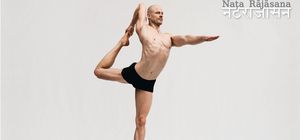
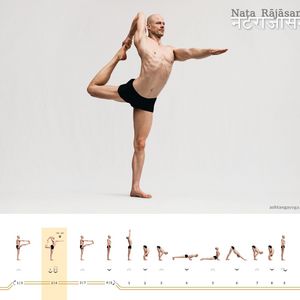
Naṭa Rājāsana: Śiva, the Lord of the Dance Dr. Ronald Steiner One leg roots down while the other opens back: Naṭarājāsana combines balance, backbending, and shoulder opening. The posture draws directly on the symbolism of Śiva’s dance.
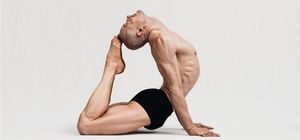
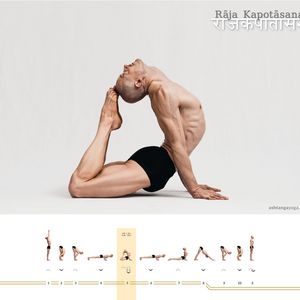
Rāja Kapotāsana: The Royal Pigeon Dr. Ronald Steiner From prone into a deep backbend: Rāja Kapotāsana, the “royal pigeon,” opens hip flexors, chest, and shoulders at the same time.
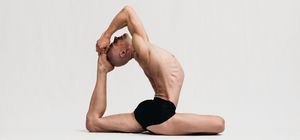
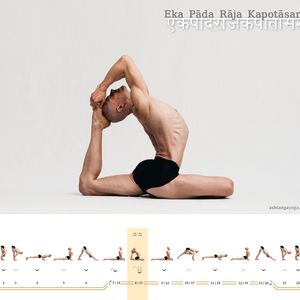
Eka Pāda Rāja Kapotāsana: The Royal Pigeon with One Leg Dr. Ronald Steiner One leg folds forward, the other arcs back like a bow: Eka Pāda Rāja Kapotāsana unites hip opening, backbending, and shoulder work into one clear shape.
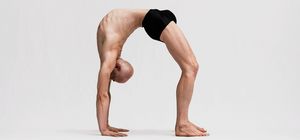
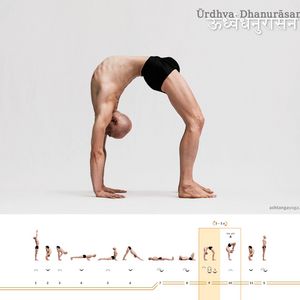
Ūrdhva Dhanurāsana: Upward-Facing Bow Dr. Ronald Steiner Ūrdhva Dhanurāsana is a backbend with an upward-facing front body, defined only by the touch of hands and feet to the ground - an upward-facing bow.
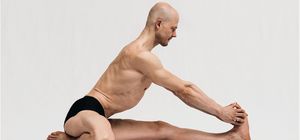
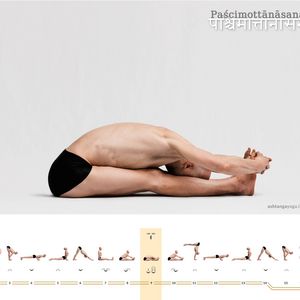
Paścimottānāsana: Seated Forward Bend Dr. Ronald Steiner In the third series of Aṣṭāṅga Yoga, the practice concludes after the backbend with the classic "Seated Forward Bend" - Paścimottānāsana.

 Dr. Ronald Steiner