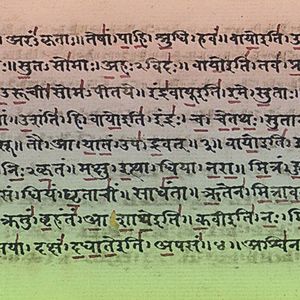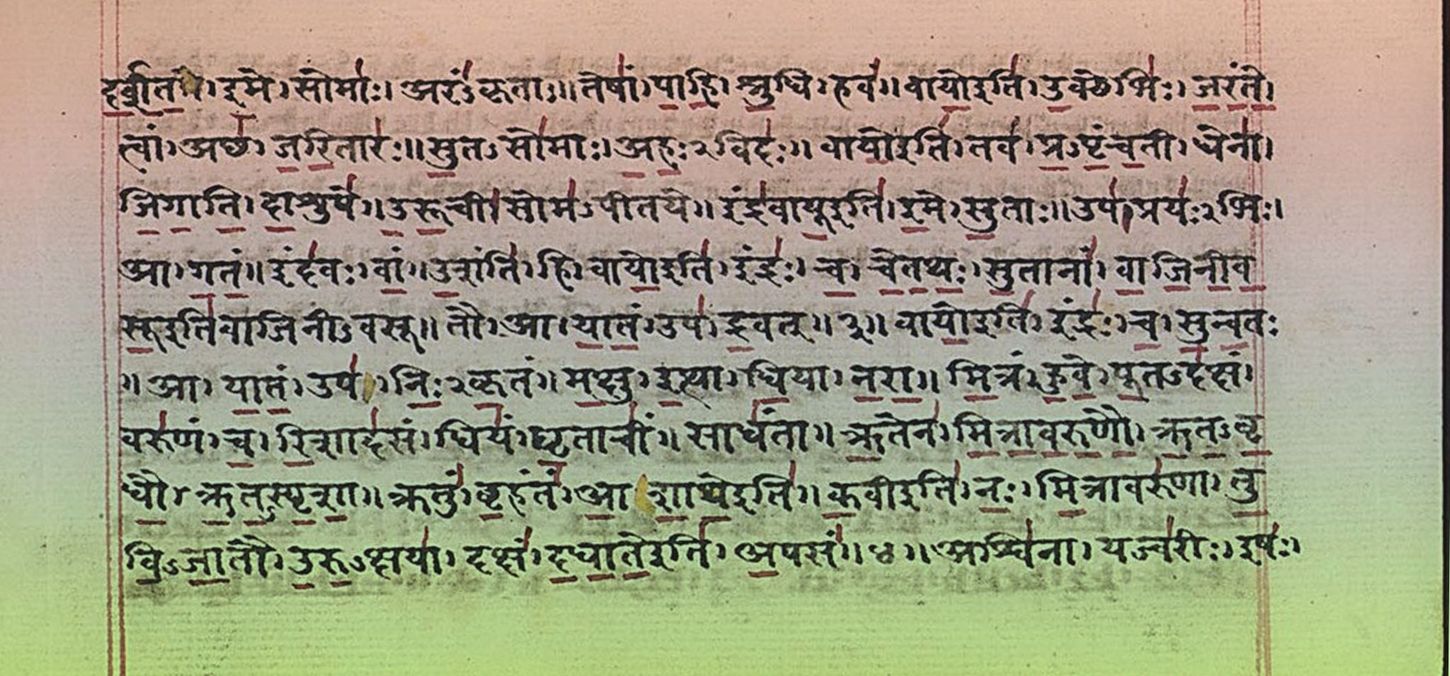

The fourth chapter of the Yoga Sūtra of Patañjali begins describing supernatural abilities and a shift in perception (siddhi). These eventually lead us to an absolute inner freedom (kaivalya) which is the culmination of the Yoga-path.

Yoga-Sutra
caturthaḥnominative singular
caturthasubstantive masculine
the fourth
caturthasubstantive masculinethe fourth
kaivalyatatpuru.sa~~-compound genitive
kaivalyasubstantive neuter
liberation, inner freedom, complete isolation
kaivalyasubstantive neuter
kevalaadjective
complete isolation, absolute bliss
kevalaadjectivepure, exclusively one’s own, alone
pādaḥnominative singular
pāda
Chapter

The fourth Chapter: On Inner Freedom (kaivalya)

Dr. Ronald Steiner
Yoga Sutra 4: On Inner Freedom
Yoga Sutra 4.1: Siddhi Yoga Sutra 4.1: Siddhi

Yoga-Sūtra 4.1: Siddhi - Supernatural abilities or a shift in perception?

In his Yoga-Sūtra, Patañjali describes five ways to achieve supernatural abilities (siddhi). Or could this have been meant figuratively to refer to a shift in perception?

Yoga Sutra 4: On Inner Freedom
Yoga Sutra 4.2-3: Sankhya and Creation Yoga Sutra 4.2-3: Sankhya and Creation

Yoga-Sūtra 4.2-3: Saṁkhya & The origins of Being

By means of supernatural abilities (siddhi), the Yogin can deliberately create new life forms. Or, is this meant figuratively to describe your own transformation?

Yoga Sutra 4: On Inner Freedom
Yoga Sutra 4.4-5: Awareness of the Self based on individual Chitta Yoga Sutra 4.4-5: Awareness of the Self based on individual Chitta

Yoga-Sūtra 4.4-5: A perceptual space experiences various things

Does the Yogin create a new being through meditation, or do they re-create themselves? - While the perceptual space (citta) can be transformed, it remains throughout the transformation.

Yoga Sutra 4: On Inner Freedom
Yoga Sutra 4.6: Siddhi derived from immersion in contemplation comes without karma Yoga Sutra 4.6: Siddhi derived from immersion in contemplation comes without karma

Yoga-Sūtra 4.6: Siddhi from contemplative immersion comes without side effects i.e. Karma

There are various ways to realize supernatural skills or a perceptual transformation (siddhi). But only through contemplative immersion can this be achieved without side-effects such as Karma.

Yoga Sutra 4: On Inner Freedom
Yoga Sutra 4.7-8: The law of karma Yoga Sutra 4.7-8: The law of karma

Yoga-Sūtra 4.7-8: The law of cause and effect (karma)

Each action (karman) bears fruit - that is, so long as we are acting from the perspective of out individual Ego (asmitā). We only experience, however, those fruits that are currently suitable to us.

Yoga Sutra 4: On Inner Freedom
Yoga Sutra 4.9-11: Karma creates sanskara Yoga Sutra 4.9-11: Karma creates sanskara

Yoga-Sūtra 4.9-11: How actions (karman) create impressions (saṁskāra)

As long as one perceives themself as separate from their environment, each of their actions bear fruit (karman) and are subject to the resulting impressions (saṁskāra).

Yoga Sutra 4: On Inner Freedom
Yoga Sutra 4.12-14: Transformation of the World Yoga Sutra 4.12-14: Transformation of the World

Yoga Sūtra 4.12-14: The world is constantly changing (pariṇāma)

Every object, including our own personal perceptual space (citta) is part of our physical world. Everything is constantly changing (pariṇāma). Nevertheless, there is a basic substance (prakr̥ti) that always remains.

Yoga Sutra 4: On Inner Freedom
Yoga Sutra 4.15-17: Object persistence Yoga Sutra 4.15-17: Object persistence

Yoga Sūtra 4.15-17: Objects are perceived subjectively

Objects and situations are perceived subjectively. Even though there is an objective reality, only that which resonates with us becomes part of our own subjective reality.

Yoga Sutra 4: On Inner Freedom
Yoga Sutra 4.18-21: Purusha observes through Citta Yoga Sutra 4.18-21: Purusha observes through Citta

Yoga Sūtra 4.18-21: Puruṣa observes through Citta

The external world is reflected in the subjective and ever-changing perceptual space (citta). The unchanging essence (puruṣa) observes this reflection.

Yoga Sutra 4: On Inner Freedom
Yoga Sutra 4.22-24: Purusha recognizes itself in Citta Yoga Sutra 4.22-24: Purusha recognizes itself in Citta

Yoga Sūtra 4.22-24: Puruṣa can recognize itself in Citta

The perceptual space (chitta) mediates between the outside world and the pure essence (purusha). This can only be recognized through the reflexion of citta within itself.

Yoga Sutra 4: On Inner Freedom
Yoga Sutra 4.25-26: Discernment creates the conditions for inner freedom Yoga Sutra 4.25-26: Discernment creates the conditions for inner freedom

Yoga Sūtra 4.25-26: From discernment (viveka) arises inner freedom (kaivalya)

The Yogin develops discernment (viveka) between it's pure essence (puruṣa) and its perceptual space (citta). From this arises inner freedom (kaivalya).

Yoga Sutra 4: On Inner Freedom
Yoga Sutra 4.27-28: Sanskara interrupts inner freedom Yoga Sutra 4.27-28: Sanskara interrupts inner freedom

Yoga Sūtra 4.27-28: Saṁskāra interrupts inner freedom (kaivalya)

Inner freedom (kaivalya) is based on discernment (viveka). However previous impressions (saṁskāra) are constantly testing the ability to discern.

Yoga Sutra 4: On Inner Freedom
Yoga Sutra 4.29-32: From Viveka to Samadhi and comprehensive calm Yoga Sutra 4.29-32: From Viveka to Samadhi and comprehensive calm

Yoga Sūtra 4.29-32: Von Viveka zu Samādhi zu umfassender Ruhe

Through discernment (viveka) arises action which is truly unintentional. From this grows a comprehensive sense of oneness (samādhi). In this state even the afflictive forces (kleśa) and the basic properties of nature (guṇa) Through discernment (viveka) arises action which is truly unintentional. From this grows a comprehensive sense of oneness (samādhi). In this state even the afflictive forces (kleśa) and the basic properties of nature (guṇa) come to rest.

Yoga Sutra 4: On Inner Freedom
Yoga Sutra 4.33-34: Signs of this comprehensive calm Yoga Sutra 4.33-34: Signs of this comprehensive calm

Yoga Sūtra 4.33-34: Signs of this comprehensive calm

With the last verses of the Yoga Sūtra, Patañjali brings the entire chapter full-circle. Our pure essence (Puruṣa) recognizes itself and rests in its own form (svarūpa).

Yoga Sutra 4: On Inner Freedom
Yoga Sutra 4: Das vierte Kapitel in Sanskrit Yoga Sutra 4: Das vierte Kapitel in Sanskrit

Yoga Sūtra 4: Das vierte Kapitel in Saṁskr̥t

Das ganze vierte Kapitel des Yoga Sūtra in Saṁskr̥t - Zum meditativen Chanten! Einmal in Devanāgarī- Schrift und einmal in ISO 15919 Lautschrift.

Messages and ratings

Your rating:

  • Profile Image

    Heike Nagel

    3 days ago

    Hallo Ron- ich habe Schwierigkeiten, folgende 3 Aussagen zusammenzubringen:
    1.allein aus der Identifikation mit dem Wandelbaren entsteht das wandelbare Selbst.
    2.der eigentliche Sinn des Wandelbaren [...] Hallo Ron- ich habe Schwierigkeiten, folgende 3 Aussagen zusammenzubringen:
    1.allein aus der Identifikation mit dem Wandelbaren entsteht das wandelbare Selbst.
    2.der eigentliche Sinn des Wandelbaren ist es, sowohl dem Betrachter als auch dem betrachteten Objekt nahe zu sein.
    3.das nichtfunktionieren des Atems nur dann Wert habe, wenn dadurch das Nichtfunktionieren des Geistes herbeigeführt wird
    Also ich Frage mich- wenn das höchste Ziel darin besteht, den Geist auszuschalten und er nur entsteht wenn ich mich mit ihm identifiziere- dann identifiziere ich mich nicht. Aber nur mit ihm komme ich in dieser Welt klar- oder gibt es diese Welt nicht? Warum habe ich also einen Geist, wenn das höchste Ziel darin besteht, ihn auszuschalten?
    Wozu habe ich einen Körper, wenn das Ziel darin besteht zu sitzen und zu meditieren? Da hätte etwas einfacheres mehr Sinn gemacht, wenn es darum geht das eigene Selbst mit der universellen Energie zu verbinden.
    Ich hoffe, du kannst meine Frage verstehen- liebe Grüße

    • Hallo Heike,
      genau da hast Du den Kern der Sankhya Philosophie getroffen. Das Yoga Sutra entstammt ja dem YogaShastra und dieses vertritt eine Samkhya Philosophie.
      - und in dieser Philosophie ist [...] Hallo Heike,
      genau da hast Du den Kern der Sankhya Philosophie getroffen. Das Yoga Sutra entstammt ja dem YogaShastra und dieses vertritt eine Samkhya Philosophie.
      - und in dieser Philosophie ist die Erleuchtung / Essenz-Erfahrung NICHT mit einem leben in der physischen Welt vereinbar.
      Das Gegenmodell dazu ist die tantrische Weltsicht. Hier ist die Welt selbst eine Kondensation des göttlichen und damit können wir das göttliche in ihr erfahren, während wir in ihr leben. - Für mich inhaltlich schlüssiger und auch besser passend für mich.
      Dennoch hilft das Verständnis der Sankhya Philosophie um in die Ursprünge des Yoga einzutauchen und auch sich selbst zu reflektieren und zu erfahren.
      Ich hoffe das hilft Dir weiter.
      Namaste und beste Grüße
      Ronald

    • Profile Image

      Heike Nagel

      1 hour ago

      Danke für deinen Antwort ;-) Danke für deinen Antwort ;-)